Showing posts with label H2. Show all posts

Monday, June 8, 2020

ios friendly teaching tools(Loom, lonely screen) & some trials on screencasting tools

Name:  Taylor Kim


Workshop Topic
ios friendly teaching tools(Loom, lonely screen) & some trials on screencasting tools 
Source of Inspiration/Curiosity
(personal experience, workshop, observation, etc)
As a big fan of Apple devices(currently owning iphone, ipad, apple watch, airpod pro),
I have wanted to use them for educational purposes as well as for looking cool.
In addition, the corona virus situation forced me to pay attention to some kinds of
“education using modern technology” such as online learning, flipped learning,
blended learning, etc. 
Language Skills Targeted:
4 skills are targeted but this time reading is my main focus
Objective
Getting potential benefits of screencasting mentioned on
Materials/Tools Needed
Laptop, i phone or ipad
Challenges, Benefits, & Extensions

Some of the screencasting programs offer significant functionality only in premium versions. 
Android friendly screencasting tools do exist but it doesn’t have good quality and require
payment
ios friendly screencasting tool(loom) offers a pro version for verified teachers in this
COVID 19 situation.
You can’t make fancy videos but can save your time making ones.
Some 
Discussion Questions
  • When making supplementary reading explanation videos for students,
how can we make it attractive ( at least not boring)?
  • If I make videos for students based on their English levels, teaching purposes,
or something, how can we specify them?

         : Add questions, puzzles
         : Make it short
         : Add some while lecture tasks such as counting how many time a teacher coughs
         : Encourage students to be a part of it e.g. use CTA(Call To Action) fuctions
         : make different videos based on teaching purpose


Friday, April 24, 2020

Teaching Demonstration#1(Hyesuk)

Topic: Happy

1. Grade: H1, H2

2. Materials and tools: Zoom, Google classroom, Google slide, Youtube video, Quizlet, Lyricstraining, Google spreadsheets

3. Learning Objectives
   Students will be able to fill in gaps while listening a song 'Happy'.
   Students will be able to build up vocabulary power and translate it in Korean.

4. Procedure
* Google slide


1) Drawing or writing down things makes you happy : Zoom whiteboard

2) Short introduction of the song and listening to the song : Youtube Happy(lyrics)


3) Vocabulary and phrase review : Live game in Quizlet


4) Gap filling activity: Lyricstraining Happy Gap filling

5) Translating lyrics of the song: Google spreadsheet Happy Translation


6) Quiz for the class : Google form Quiz_Happy

7) Poll_Are you happy : Google form Poll_Happy

teaching demonstration #1 (youngjoo)

Teaching demonstration #1

Textbook/Chapter  능률(김) Lesson 3. Sound Life

Grade Level: High school 1st grade

Lesson Title: healthy eating. 


Learning Objective
To enable students to get information ‘3 ways of to be healthy’ by listening to a You-tube video clip. 
To enable students to explain their favorite foods and the food their parents want them to eat. 
To enable students to make a poster to persuade ‘eating healthy foods’ 
To enable students to write a short column to decrease the consumption of unhealthy foods as much as possible

Teaching procedure (Nearpod)
1. motivation game
2. post student's opinion 'what is healthy eating?'
2. listening youtube
3. listening comprehension activity &summary
4. speaking dialogue
5. assignment
(making a poster by canva.com or writing a column)

nearpod


Assignment Help

* Students can watch this video by themselves for making a poster
https://www.youtube.com/watch?v=WL-WbHwsbs8&t=8s

*examples


Friday, June 15, 2018

Reading a book cover

MICROTEACHING OVERVIEW
Name:  Nam, Kyunghwa( Kate)                                                Grade Level: Grade 10
Topic/Lesson Title:
Reading a book cover

Source of Experimentation
 The Help written  by Kathryn Stockett

Language Skills:
Reading skills, speaking skills, and listening skills
Learning Objective:  (What will learners know or be able to do after this activity/lesson?)
  • Students can guess the meaning of the new word from the context. 
  • Students can find the information of characters, setting, and the theme of the book by reading the back cover of The Help. 
  • Students can check their understanding about the book by making questions about the text and answering others’ questions by doing Bingo game.

Materials/Tools/Links
  • Copies of the back over of The Help
  • Handouts
  • Whiteboards with markers
Overview of Entire Lesson
Students make a guess about the story from the book cover and read the back cover in groups. They check unknown words and find the information about the characters, setting, and theme. Students fill a bingo grid with the words from the text and play the game in their group.

Procedure of Portion Demonstrated

  • Pre-reading stage :
    Student make a guess about the story of The Help from the front cover.

  • While-reading stage: 

  1. Students in groups read the back cover of The Help and check the unknown words in the text. 
  2. Students in groups find the information from the text : characters, setting, and themes

  • Post-reading stage:
    Students in groups play the Bingo game by making comprehension questions about the text and answering them.

    HWP file: synopsis of the help

Saturday, August 26, 2017

Reading class(Guessing game, Station Activity, Ticket to the door)

1. Introduction : Guessing Game
- Giving 5 clues related to a topic. Show one by one.
- If ss get a right answer with less clues, they can get more point.

2. Whlie- and after-reading activity : A Station Activity

3. Ticket to the door : Completing a Flight Ticket

Tuesday, August 8, 2017

Lessons with Precepts & Wise Sayings

Mr. Browne’s usage of precepts inspired me to try something like this in my undergraduate composition classes.

  This Google Document contains a list of all saying and short descriptions of related lesson activities. Please add other wise sayings and ideas about how to use them in our teaching.


Tuesday, June 20, 2017

Jigsaw Reading Activity with Wizer.me and Padlet

A. Comprehension Check-up with Wizer.me

  1. Each student reads the given paragraph individually.
  2. Pair Work
     - Students tell what they read to their partners in their own words.
     - Students listen carefully what their partners say and take notes.

   3. Students access to Wizer.me( http://wizer.me ) with given student codes, type in their names and solve the assigned questions about their partners' paragraphs.
     ( sample code: FGLDGX for student A )

   4. After students hand in their answers online, teacher can check the students' results.


B. Cooperative Sentence Sequencing with Padlet
  
  1. Group Work
     - Students retell the stories they listened to the other pairs in their groups.
     - Students listen carefully what the other pairs say.

  2. Students access to Padlet assigned to their groups. (example: http://goo.gl/BMA98j )
  3. Students reorder the sentences according to the stories they listened in their groups.
4. The team that finishes first would be the winner.

* Powerpoint Presentation link for the class:

Vocabulary Check-up Activity with Quizlet Game

- If you already have word sets on Quizlet, your students can get access to Quizlet word-matching game without their own accounts. (http://goo.gl/hky6kv)

- For students' convenience, you can create a short URL with Google URL Shortener.
  (http://goo.gl)

The first student who makes every word disappear would get a bonus point.

Wednesday, May 17, 2017

Logic Problems

Logic Problems
Provide students with a logic problem or riddle that they need to discuss together in order to solve.

Example: Danny’s Family  Danny is having a birthday party with 6 of his family members. They are his grandmother, mother, aunt, brother, father, and uncle. Their names in random order are Ben, Julie, Mike, Betty, Jane, and Luke.
Listen to the clues to discover the names of Danny's family members.
Clues:
1. Ben is not Danny’s uncle.
2. Danny’s grandmother’s name starts with B.
3. Luke is not Danny’s brother.
4. Julie is not his aunt.
5. Danny’s father’s name is Mike.


Puzzle and Riddle Sources


Logic Puzzles Google Doc


Adaptions &Extensions

Clue Dictation: Instead of providing students with the clues, dictate the clues. Students have to accurately write down the clues and confirm them with group members before solving the puzzle.

Pre-puzzle Treasure Hunt: Hide the clues around the classroom.  Students have to find them in order to solve the puzzle.

Student Generated Clues: Give students a scenario and/or graphic organizer and have them write clues.  Exchange these with other groups and solve each others' puzzles. 

Thursday, May 11, 2017

Reading and grammar exercise by Running Dictation

Activity
Details
Running dictation
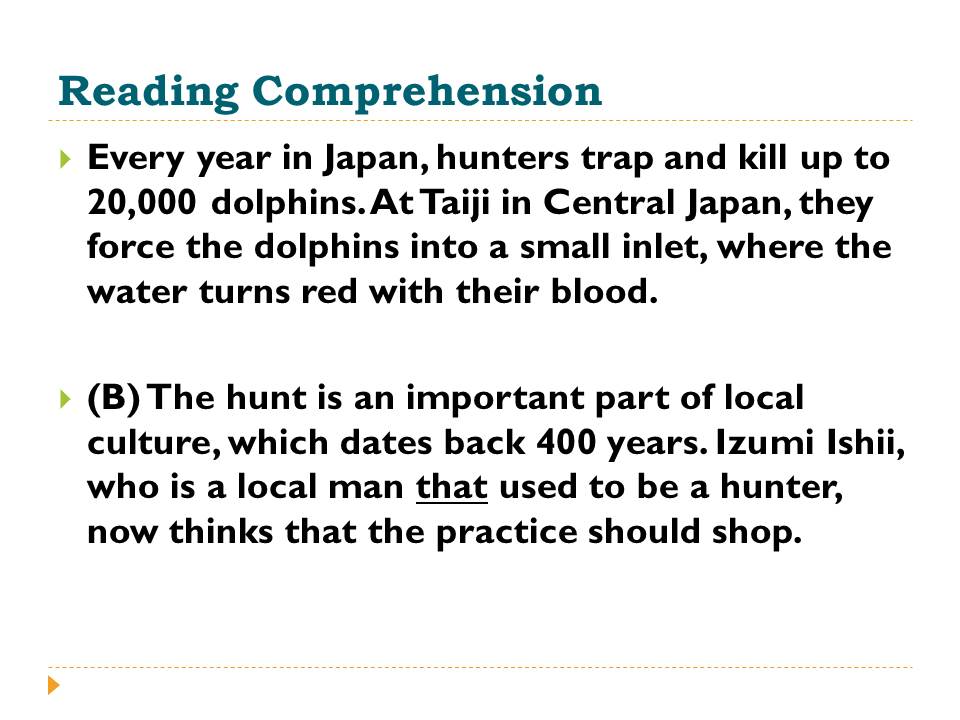
Teacher chooses a reading material (a paragraph-long) which contains some relative pronouns.
Teacher divides it into 3 or 4 part, and shuffles them in wrong order.
Teacher posts them on the wall, and makes students do “running dictation” as a group activity.
Running dictation : A student runs to the wall and memorize his or her allotment of the reading paragraph and tells the group recorder what he or she memorizes, and the the next students does the same until the group finishes completing their reading material”
After completing the dictation part, students correct the order of the parts of the paragraph and read it individually.
Reading comprehension
While reading the well-ordered paragraph all together, students solve some comprehension check questions.
Teacher explains some important vocabulary and difficult structures and checks if students understood the contents of the paragraph or not.
Formative test
Teacher gives some example sentences which have a blank and makes students fill in the blanks with the correct relative pronoun.


Jigsaw interview with the structure “Would you rather…?” and second conditional “if”


I wanted to come up with a creative lesson for high school students combining speaking, writing and grammar skills together with student-created authentic materials. Luckily I found an useful resource from this link(http://lessonstream.org/2015/08/31/would-you-rather) and combined this with student-oriented jigsaw interview as follows.

1. Watching the video
  • Ss watch the video to get the gist
  • T suggests the target structure of the conversation
  • Ss watch the video again focusing on target structures


2. Presenting sample questions and answers
  • T presents sample questions and answers to Ss
  • T informs Ss the activity procedure and makes sure Ss understand it

3. Making up questions

  • Each group makes one interesting interview question with target structures
  • T provides post-its to each group


4. Interviewing students

  • Ss move to their jigsaw groups and interview other Ss
  • Ss write down the interview results on post-its
  • T monitors and takes note of what Ss say focusing on target structures


5. Writing class survey reports

  • Ss come back to their original groups
  • T presents some examples of what Ss say and asks Ss to improve it
  • T gives class survey report sheets to each group
  • Ss collect the post-its and complete the survey report sheet with full sentences
  • T monitors and gives help to lower-level Ss
  • T gives a notice for the next class


'Thing Do-ers'


Topic/Lesson Title:
Vocabulary learning through a game
Language Skills:
Vocabulary learning, Speaking
Detailed Procedure
Activity
Details
Time
Greeting
  • To say hello to each other
30 secs
Reviewing
  • To review what ss learned during the last class
30 secs
Introducing Today’s Topic
  • To let ss guess what they will learn today using some visual aids(pictures on PPT slides)
5 mins
Doing an Activity
  • To make some groups and ask ss to name their group
  • To introduce some steps of today’s activity
  • Ss is going to watch a video clip (while ss are watching a video clip, they should memorize the order in which things come out)
  • T is giving them a worksheet in which a grid is given and a sticker worksheet. Using stickers, ss can fill in the blanks on the grid.
  • To complete the worksheet, ss have to order the items and figure out what they are called. Each item has the ‘Thing do-er’ structure name like ‘bodybuilder’ or ‘anteater’
  • To find out a note on which a hint is written, ss can look around the classroom.
  • A group to finish their work first is going to be a winner.
  • To check the answers together by watching another  video clip
24 mins
Closing
  • To have a short preview on the next class
  • To wrap up the class
30 secs

Link : http://lessonstream.org/2016/10/05/thing-do-ers